Adapting an Outdoor Day to Changing Stamina Without Giving It Up
Changes in stamina can so affect an outdoor plan that before you know it, you'll find that instead of enjoying another great trip, you're in danger of being unable to complete it. A steeper hill than normal may require more frequent stops to recover than you had anticipated. A heavily packed backpack may become a poor trade for a few hours of good hunting. And the return trip to your vehicle, which at the beginning of the day seemed to be about the same distance as your incoming trip, can be a real source of trouble as the day wears on.
Start with a more honest baseline
First identify your new fitness baseline for long distances and very heavy packs before going out on the trip. That means figuring out what has changed for you since your last long, somewhat demanding trip. Have your energy levels gone down? Are you less balanced? Do you get breathless more quickly? Does your body take longer to recover from demands on it? Have you noticed that you have less tolerance for heat or cold?
Keeping a simple log of your efforts to travel and set up a camp can help you identify what you are capable of. You simply record the distance you have been able to travel whilst carrying a pack, how comfortable your pack has been, the weather, how often you have stopped for rest and where you felt that you could no longer continue to move effectively and begin to feel that you are no longer able to think clearly.
Any new or unexplained symptoms be given their due respect. Do not mistake unusual symptoms for more ordinary fatigue, such as that experienced by a hunter being to walk long distances while loaded down with gear. Stop immediately and seek the appropriate help for your symptoms and follow the advice of your doctor. Remember to check for current medical information.
Build the day around energy, not distance
The distance a route is does not necessarily tell you how difficult it will be for you. Long distance does not always mean hard work. Difficult ground such as steep hills, loose rock, wet dirty heathland, deep snow, heat or cold and a very heavy pack can make a long distance route very difficult indeed. Identify the hardest part of your route and consider whether that section would be better at the start of the day when your energy is at its highest.
Consider breaking your longer trips into segments with points of decision along the way (i.e. trailhead, a sheltered rest location, a fork in the route, your hunting location, etc.). For each of these locations list the factors that could prompt a turn around of shorter days. Reaching such a point while tired is often more difficult than having deliberately turned around at that location when at your best.
So for hunting it may be that we define what it is we want to go out and achieve with our hunting trip, and then allow ourselves to be less than 100% packed for the longer portion of our day, for example. A shorter sit, a different access point, or even a return trip on a different day can help to make sure that we are able to experience all that we wish to on our hunting outing.
Treat pacing as a field skill
Note that when we talk about "pacing" we are not talking about slowing down to a crawl and plodding along. Rather we are talking about traveling at a pace that allows for adequate reserve should things not go as planned. That means more frequent stops of longer duration than a person might normally take, and the ability to assess, on a moment by moment basis, how things are going and whether or not continue on is wise.
Note that being subdued or in denial about to continuing to head out can also be an indicator that a person needs to head back to the vehicle. Losing gear, getting lost, becoming even more short tempered than normal, or having trouble completing tasks that you normally complete with no problem also warrant bringing an end to the day's adventure.
Don't rely on feeling better after a rest for a few minutes. Test the change by continuing on at a slower pace for a short distance and see if you still have problems. If not, things may improve as you continue on. But if you start to feel worse, or things get just as bad or even worse after a rest, then it's time to head back and get appropriate medical care for your symptoms.
Reduce the load before buying new gear
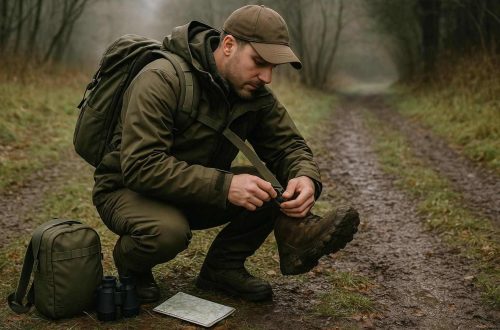
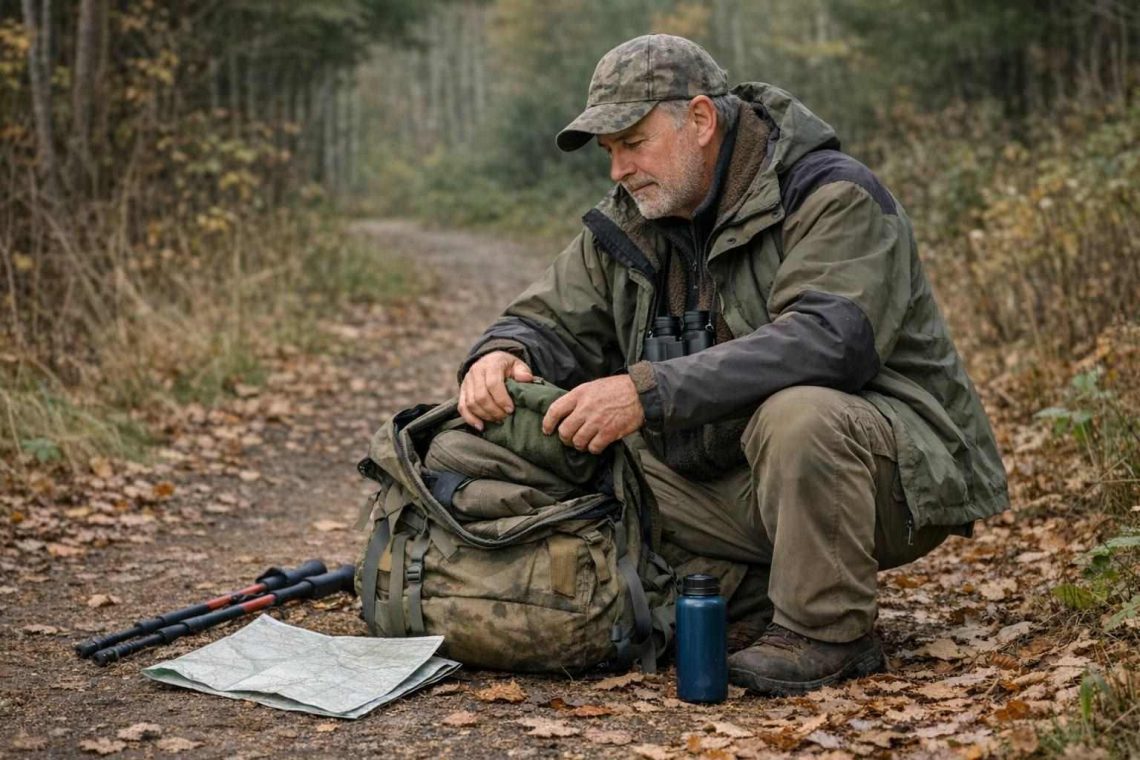
Even after organizing your gear to support changing stamina, don't be afraid to strip back items you don't need for the specific objective of the day. Disorganization can come quickly when we are fatigued and re-packing all gear to ensure that essentials are near to hand can help mitigate this.
The help of additional equipment can ease outdoor pursuits. Supports for the back and legs help distribute loads in order to aid comfort and stop soreness. But first test the aid in order to find out if it is of use in the intended outdoor environment. Also check the packing in order to be able to find the required pieces of equipment quickly in case of an emergency.
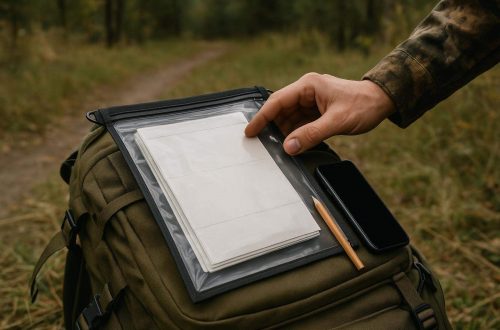
Make sure to have essential items (water, weather gear, maps, communications, first aid supplies, etc.) divided by purpose and easily accessible. Everyone in your party should know where all of the critical items are and what to do in case you get separated from each other.
Choose routes that leave options
Routes that offer alternative ways to reach the same endpoint (e.g. out-and-back routes, an access road, a nearby shelter, an alternate route to return to the vehicle) can be more "stamina-friendly" than route segments that offer little alternative to completing the loop as originally intended.
All outdoor activities, whether in hunting or other activities, need to be matched with one's current ability to manage them. Thus, a familiar woodland edge, a fixed observation point, a vehicle-supported habitat project, or even short routes, which allow ample time for quality wildlife viewing, can provide many "accessible" outdoor activities.
So do check for changes to hunting seasons, for access restrictions and for transport restrictions on public land, and for changes to other conditions and permissions that affect your outdoor plans. This information is usually supplied by the relevant land manager(s) and by the relevant jurisdiction(s), and it is usually found on their websites.
Know what should end the day
Increasing weakness, lowering of judgment, pain that worsens, uncontrolled shivering, signs of heat illness, frequent falls and inability to communicate effectively are all reasons to cease activity and move to safety and to use the emergency plan in place. As with any medical emergency seek help immediately by contacting local emergency services for assistance.
Companions should come to a prior agreement regarding indicators of concern and carry out simple checks such as 'How's your balance and breathing?'. A person can always be asked if they're fine but it's far more difficult to get them to admit to less than ideal circumstances. No one should be forced to continue on in order to complete a predetermined route, pursue hunting, or test out new gear.
Challenging outdoor work doesn't have to mean abandoning your activities outdoors. Reducing the number of objectives for a day and re-working your objectives and activities to make better use of your reserves will allow you to continue to enjoy your outdoor activities. Simply re-working your plan to allow for easier returns between objectives will ensure that you continue to have the best possible outdoor experiences.